St. John’s Green: A New Community Space Rooted in Restoration
- Noah Hilton

- Oct 25, 2025
- 2 min read
All photographs are taken and owned by Noah Hilton unless otherwise stated.

After years of planning, collaboration, and hands-on restoration work, St. John’s Green is officially open and ready for the Brighton Heights community to enjoy. Located on a once-underutilized parcel of land, this new green space represents what is possible when local organizations, volunteers, and neighbors come together around a shared vision for healthier neighborhoods and resilient urban landscapes.
Led by Allegheny Land Trust, the project transforms the site into a welcoming place for recreation, environmental education, and ecological function, benefiting both people and wildlife.

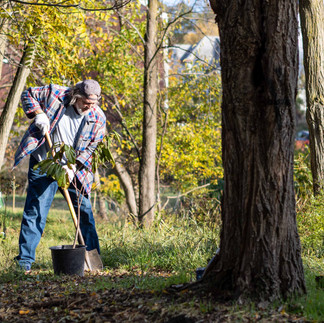
Volunteering as a photographer for this project was incredibly meaningful for me. Being able to capture the energy of the day, neighbors working side by side, volunteers planting trees, and a long-imagined green space finally coming to life, was a powerful reminder of how much compassion and collaboration goes into community-driven conservation.
A Space Designed for People and the Environment
Visitors to St. John’s Green will find a thoughtfully designed landscape that balances accessibility with conservation. A walking trail winds through the site, inviting neighbors to explore the space at a relaxed pace, whether for a quick stroll or a quiet moment outdoors.
Equally important is what lies beneath the surface. The site incorporates green stormwater infrastructure, designed to slow, capture, and absorb rainwater during heavy rainfall events. In a city where stormwater runoff can strain infrastructure and waterways, these systems play a crucial role in improving local water quality and reducing erosion.

Native Plantings That Do the Heavy Lifting
The recent celebratory tree planting marked a major milestone in the project. Volunteers helped establish native species selected for their ecological impact and long-term resilience:

Northern Red Oak trees anchor the site. These keystone species support a wide range of insects, provide nutrient-rich acorns for wildlife such as squirrels and chipmunks, and serve as powerful carbon sinks thanks to their size and longevity.
Echinacea purpurea (Purple Coneflower) adds both beauty and function. This native wildflower attracts pollinators, resists pests and disease, and brings vibrant color to the landscape throughout the growing season.
Panicum virgatum (Switchgrass) provides essential ground cover. Native to North America, switchgrass helps prevent soil erosion, tolerates drought, creates habitat for small birds and rabbits, and thrives in a variety of soil conditions.
Together, these plantings create a living system that will mature and strengthen over time, increasing biodiversity while requiring minimal long-term intervention.

Looking Ahead
St. John’s Green is a new beginning. As plants establish, trees grow, and neighbors make the space their own, the site will continue to evolve into a shared asset for Brighton Heights. Whether used for quiet reflection, casual walks, or community connection, this new green space stands as a lasting investment in environmental health and neighborhood well-being.
The land is ready. Now it’s time to see how the community brings it to life.










Comments